- Why History
- Take Luck to Heart
- A Conversation about George
- Harry S. Truman
- The Good, Hard Work of Writing Well
Why History

History teaches us not to fear human progress. It shows us what we’re capable of—the hardships we can endure not only as individuals but as entire societies. History is the bedrock of patriotism that leaves no room for boasting. It reminds us that we are not perfect, that we must be cautious. Yet it is our very caution, contrasted with moments of bold ambition, that has driven us this far. Just as watching a child fall on the playground teaches us what not to do, so does history.
History also inspires. It teaches us to laugh and not take things so seriously, while also showing us that everything matters. When we look at the greats—Washington, Tesla, Einstein—we see how human impact shapes the world.
Lastly, history bridges the gap between the educated and uneducated. While math may be the language of the universe, and I won’t argue its importance, history is the language of humanity. Math will exist without us, but history needs our curiosity to survive. Math is discovered; history is created and then interpreted. We can look back a thousand years and ask, “Why did they make these decisions?” We may never know their reasoning, but we’ll always know the outcome. In a thousand years, they’ll ask the same question about us—but we know the answer. Except we won’t know the outcome. The study of history, of course, makes it easier to predict outcomes. All you need is curiosity about why and how things happened.
Take Luck to Heart

One aspect of history that is hard to avoid is luck. As a believer in Christ, I prefer to use the term divine intervention, but luck is a worldwide term. Regardless of belief, luck is real. Whether you think luck is created or just bestowed upon us, the very world we live in and the life you live have been shaped by moments of pure luck. Decisions out of our control. There are two principles of luck: the luck of courage and the luck of the people we meet.
The luck of courage is the luck that we seize. The moments we don’t know what’s going to happen. When we don’t know what’s at the end of the river, but we continue to steer anyway. A clear example of this was August 19, 1776, when George Washington made the brave decision to cross the East River in order to escape the British army. An army that was three times the size of the Continental Army. If George Washington had been caught, the entire army would have been squashed, and the United States we live in today might not exist. What saved them? Fog. A thick fog that covered the boats as they rowed across the river. That fog would have been useless if George Washington didn’t seize the opportunity. I believe that luck can be created, but more times than not, luck can be seized.
The other principle of luck is the people we meet. No person is self-made. Who we are is always dependent on those we meet. Our opportunities, too, are dependent on those we meet. Look back at George Washington. He was put in charge of the Continental Army due to his affiliation with the other founding fathers, mainly John Adams, who then became Washington’s VP. We can’t choose who we meet, and we can’t choose who stays in our lives, but we can be grateful. Be grateful that luck put them in our paths.
A Conversation about George
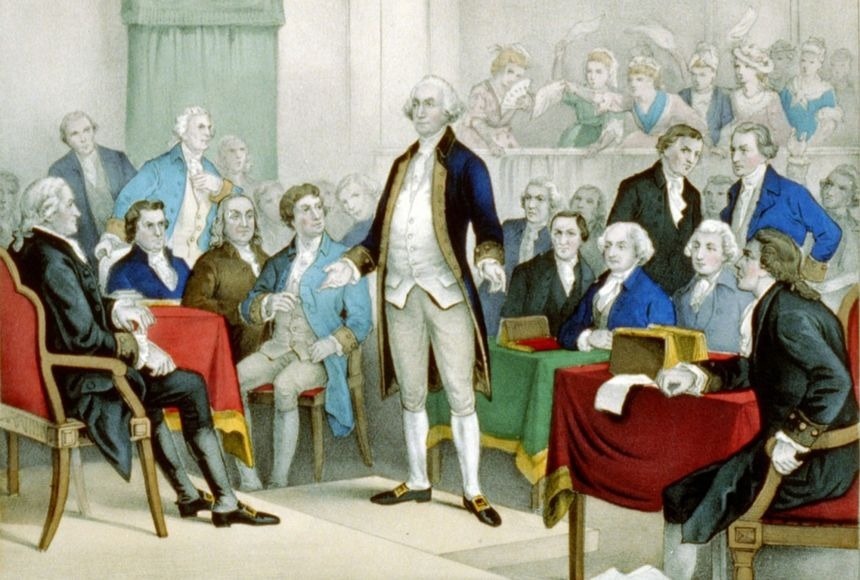
One of the best ways to learn about history is to learn about important figures in history. Not only do they give us great insight into our past, they can also mentor us indirectly. One of these figures is George Washington, whom McCullough argues is a figure we can’t turn our backs on. I’d even go one step further and argue that George Washington is the greatest president we’ve had, for the simple fact that he defined what it means to be president. I don’t think that attribute can be applied to any other person in any other field. No scientist has defined what it means to be a scientist to the point where every other scientist after them models their research after theirs. No artist has defined what it means to be an artist. George Washington, though, has defined what it means to be president. Either intentionally or unintentionally, every president has modeled themselves after Washington. Let’s look at the four-year term limit, for example. It was not mandated by the 22nd Amendment that presidents serve only two four-year terms until after Franklin D. Roosevelt won his third election. Before that, it was only tradition that made our former presidents serve only two terms. Who started this tradition? George Washington. In fact, a decent amount of our first Congress wanted Washington to be a king, largely Alexander Hamilton. George Washington was humble enough to decline. In 1797, when George Washington decided to step down as the first president, King George III said, “If he does that, he will be the greatest man to ever live!”
Humility is the one word I would use to describe Washington. He was a humble leader and a humble commander. This may be a hot take, but George Washington was not a good general, at least compared to other generals like Grant and MacArthur. Out of the 15 battles that Washington led, he only won six. Washington knew that he wasn’t the best at tactics and would often ask for advice. He knew his strength lay in morale and bravery, being the one to charge first into battle. Remember the crossing of the Delaware.
Bravery and humility defined George Washington. If you want more proof of his character, just look at the myths around him. There are a lot of myths about George Washington. One large example is that he told his father, “I cannot tell a lie,” after chopping down a cherry tree. These myths, though, are based on his real character. We can also look at what has been said about him by peers. Take Abigail Adams, for example, who wrote to her husband, John Adams, “I am apt to think that our late misfortunes have called out the hidden excellencies of our commander in chief.”
Harry S. Truman
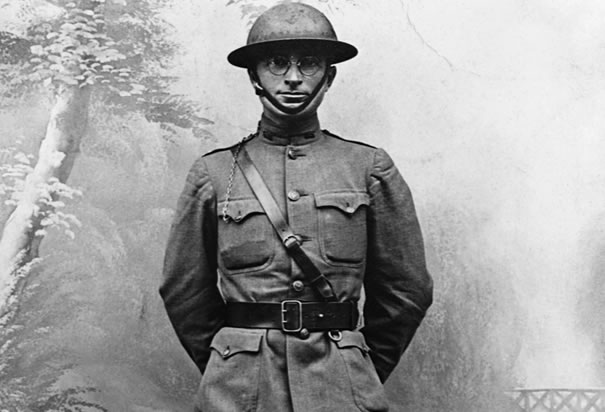
The key characteristic that made Washington one of our greatest presidents was humility. That same characteristic also applies to Harry S. Truman, but in a different manner. George Washington was humble, though he came from everything. He had a multi million-dollar estate, a successful military career, and an outstanding reputation throughout the country. Truman, on the other hand, was humble because of his modest upbringing. Truman grew up on a farm with no running water or electricity and eventually went to war. He was so determined to enlist that he memorized the eye chart due to having terrible eyesight. It paid off because even though he was timid, he rose to captain. He found an appreciation for leading people and holding his regiment accountable in the heat of battle. When they wanted to run, he yelled profanity and forced them to do what needed to be done. This was the same man who called himself “a sissy.” One can be humble in all one has, but one can also be humble in what one doesn’t have. Too many of us compare who has had it harder or who made it out of the thickest mud. Truman not only made it out of the mud, he kept his jeans on and walked around dirty for all to see. No shame, but no boasting. Only doing what is right. Truman kept this virtue all the way up to his presidency. When FDR passed, Truman said, “I’m doing as I please for the next 2 years and to hell with them.” McCullough adds that although Harry S. Truman’s presidency was marked by controversy, including the use of the nuclear bomb, the Korean War, and the recognition of Israel, Truman never made decisions based on polls. We can disagree with him, but we must admit, as McCullough says, “Truman put what’s best for the world and America over his own success.”
The one decision that haunts his presidency with an unfamiliar scent was the decision to drop two nuclear bombs on Japan, killing approximately 300,000 civilians. Yes, the loss of innocent life is tragic, but it’s important to look at these things with perspective. First off, keep in mind that the bomb was originally designed to be used against Nazi Germany. Today we view nuclear weapons as a scare tactic, but they were originally designed to be used regardless. It’s only in our timeline that they were dropped on Japan. Let’s also look at the long-term cost of war. The total cost of human life due to air raids in Japan alone was around 300,000. Add this to the Japanese philosophy of Bushido, “Death before surrender,” and it becomes easier to see why Truman dropped the bomb. Either the war ends swiftly, or America continues to kill Japanese people while shedding American blood and spending American money in the process. Was the outcome awful? Yes, but we find in history that, unfortunately, everything that matters is due to the shedding of blood.
The Good, Hard Work of Writing Well

What truly made Truman into the man he was was his love for learning. He would spend so many late nights at the library as president that he started answering late-night calls from patrons asking questions about the library. Truman was defined by a desire to learn, a desire we should all have, whether it’s about ourselves, the world, or our profession. A desire to learn is what leads to fulfillment. We are social creatures, though; to learn and hold it in is to the brain as holding air is to the lungs. We must share what we know, not just for others but for our future selves. We forget more easily than we obtain information. That is why it is important for us to write. Writing is the best medium to record thoughts and information. Spoken words are forgotten. Digital information can be wiped out. But written words are eternal. Everything we know about history, and even science, is due to the writings of our past. We can add to them. We must add to them! History gets a bad reputation for being boring, but we are living in history. If you go through your life and think, “Man, this is boring,” experience more and write more.
Link to buy:
https://www.barnesandnoble.com/s/1147005539
 LuckyReads
Leave a comment